Spring Term 2026
English - Writing
This half term, our English Writing curriculum continues to follow the Literacy Tree "teach through a text" approach. This immersive method places high-quality children’s literature at the heart of our learning, allowing children to develop their grammar, spelling, and composition skills while engaging deeply with meaningful themes.
Lubna and Pebble by Wendy Meddour
We begin the term by exploring this touching story of friendship and kindness. To bring the story to life, each child will select and care for their own "pebble," even creating "cosy homes" for them using shoeboxes.
- Key Learning: Children will write thank-you letters, postcards of advice, and use expanded noun phrases for description.
- Main Outcome: An original narrative centered on the theme of bravery.
The Bear and the Piano by David Litchfield
Next, we move into the world of music and fame. The children will be whisked away to a classroom "piano concert" to spark their imagination. This text explores the balance between following your dreams and the importance of belonging.
- Key Learning: We will focus on using contracted verbs in letters, writing news reports, and researching "Animal Orchestras."
- Main Outcome: A detailed information text based on their own researched animal characters.
The Bear Under the Stairs by Helen Cooper
We conclude the half term with a look at imagination and overcoming fears. The sequence starts with a mystery—a strange shape hidden under a blanket in the classroom! This rhyming, lyrical text is perfect for practicing phonics and descriptive language.
- Key Learning: Pupils will create a "file of fears," write letters in role as the main character, William, and learn to distinguish between fact and fiction.
- Main Outcome: A narrative about a child overcoming a fear, alongside a factual report about real bears.
Through these three wonderful books, the children will not only grow as writers but also explore vital PSHE themes such as empathy, generosity, and resilience.
Looking ahead to next half term, our English Writing lessons will continue to use the Literacy Tree approach, diving into two captivating texts that explore our relationship with the world and the power of imagination.
Dinosaurs and All That Rubbish by Michael Foreman
We start the new term with an environmental classic. This fable explores themes of greed, conservation, and the importance of keeping our Earth a "nice place to call home." Through the story of a man who builds a rocket to find a better world—only to realize the beauty of the one he left behind—the children will engage in vital discussions about recycling and sustainability.
- Key Learning: The children will write setting descriptions, letters of advice, and explore the use of similes to describe their dreams for the planet.
- Main Outcome: A collaborative class pamphlet packed with instructions and reports on how to look after our environment.
The Dragon Machine by Helen Ward
Next, we shift from the environment to the world of fantasy and invention. The sequence begins with a "dragon hunt" across the school, as children look for clues of hidden mythical creatures! This enchanting story about a young boy named George helps children explore feelings of belonging and self-acceptance.
- Key Learning: Pupils will develop their descriptive and positional language, create "dragon guides," and write letters in role. We will also focus on specific Year 2 spelling patterns and editing skills.
- Main Outcome: An extended narrative where children write their own version of a dragon story, featuring their very own dragon machine inventions.
By the end of the term, the children will have developed their skills in both non-fiction (pamphlets and reports) and narrative fiction, all while building their vocabulary and grammatical accuracy.
Computing
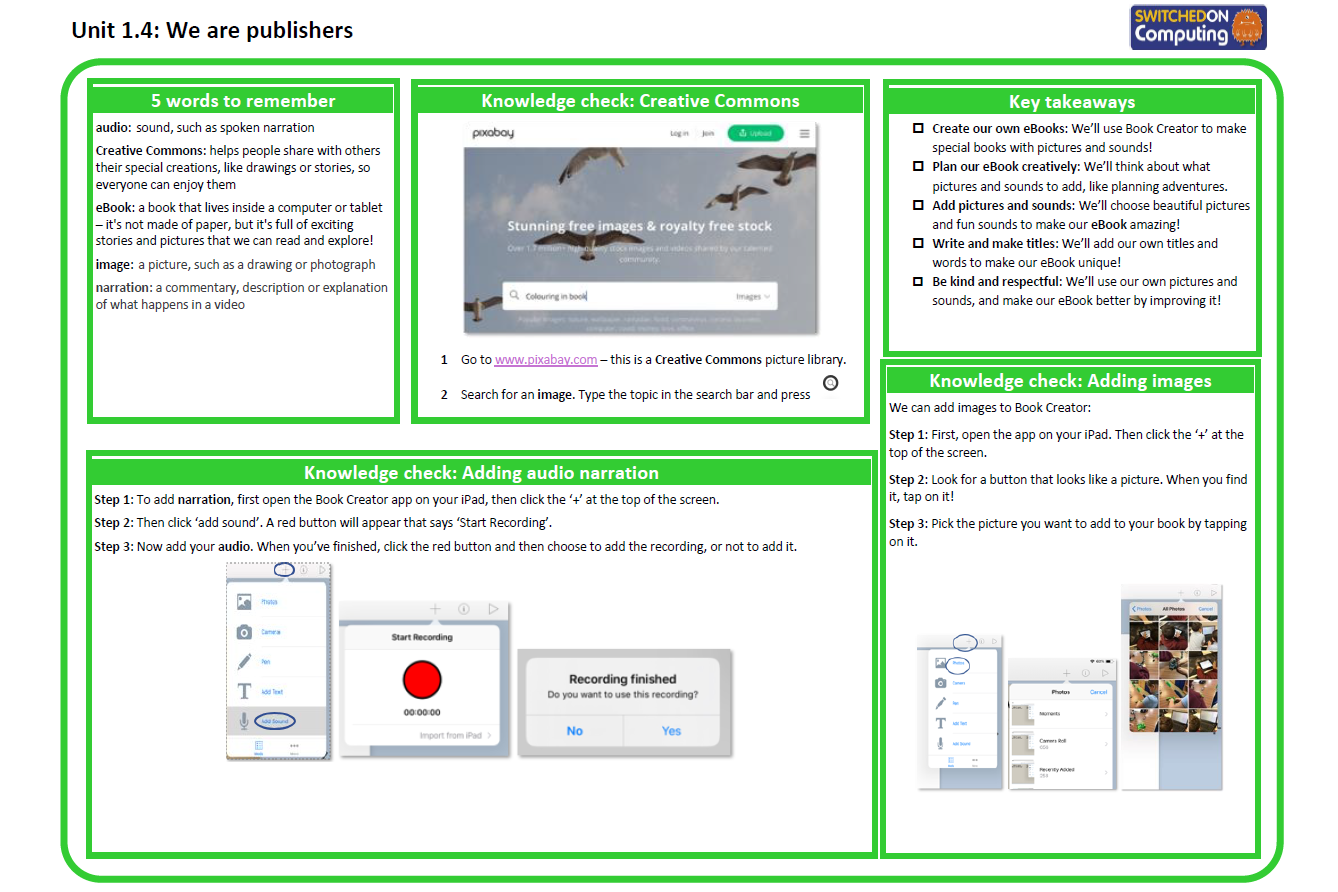
We start the new school year with the unit: 'We are publishers', where pupils create a multimedia eBook about their achievements. They will learn to plan their book, choose and import images, and record audio commentaries. Children also develop word-processing skills by adding and formatting text. Importantly, the unit teaches essential online safety, including respecting copyright and protecting personal privacy.
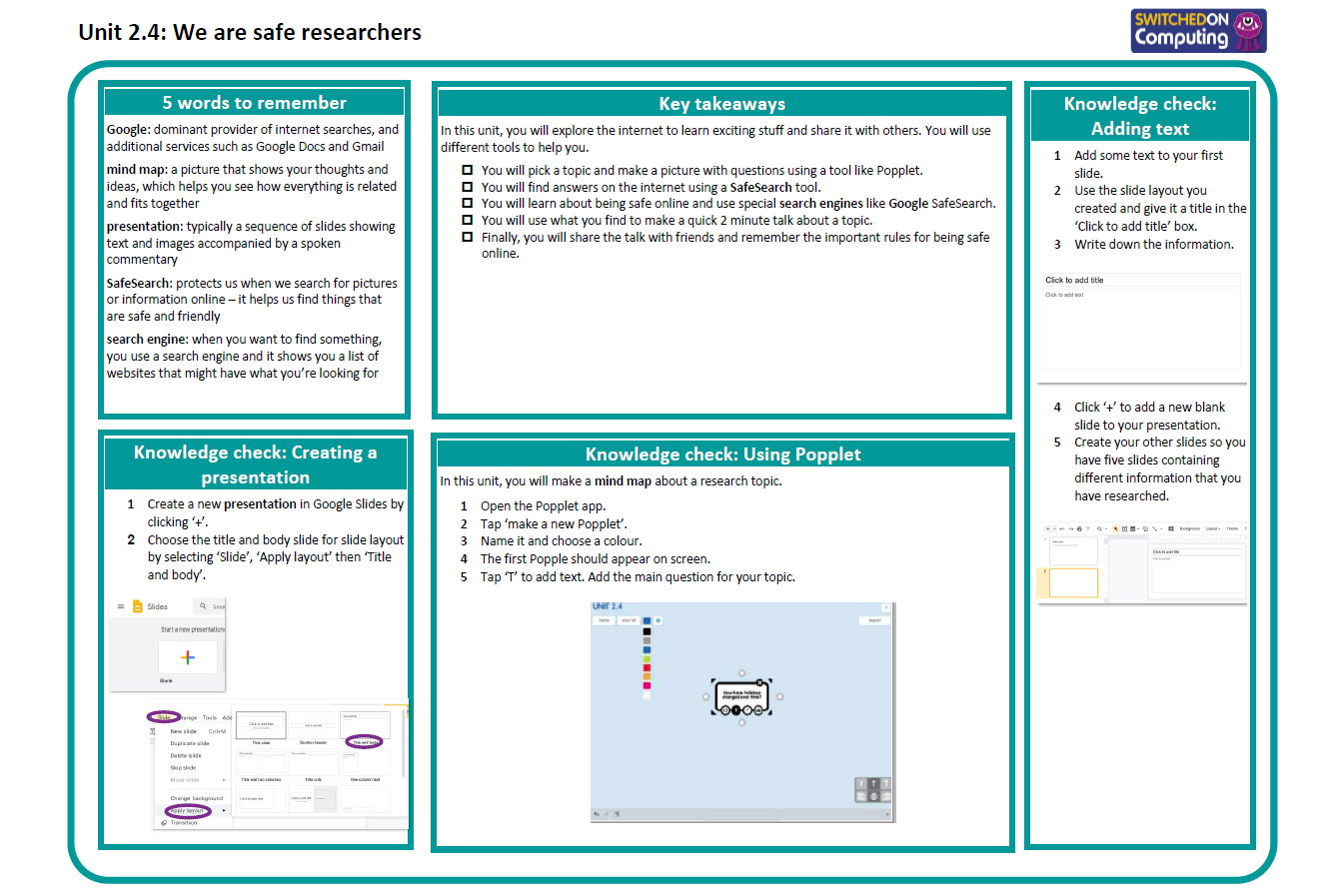
After half term we will explore the unit: 'We are safe researchers', where pupils develop essential research skills using the Internet. They will learn to use search engines safely, understand privacy implications, and evaluate the reliability of online content. Children improve note-taking through mind mapping and create multimedia presentations. Importantly, they learn to respect intellectual property by using Creative Commons images.
Maths
In the Spring term, Year 1 and 2 children develop foundational skills in calculations, measurement, and data:
• Addition and Subtraction within 100 (Spring 1): Pupils learn to add and subtract ones and tens, including adding across 10. They progress to calculations with two 2-digit numbers and solve missing number problems.
• Multiplication and Division (Spring 2): This block covers counting in multiples of 2, 5, and 10, and introduces equal groups, arrays, and sharing. Children study the 2, 5, and 10 times-tables and learn about odd and even numbers.
• Length and Height (Spring 3): Children measure using centimetres and metres, compare and order different lengths, and apply the four operations to measurement problems.
• Statistics (Spring 4): Pupils learn to organise data using tally charts and tables. They also draw and interpret pictograms and block diagrams.
Music
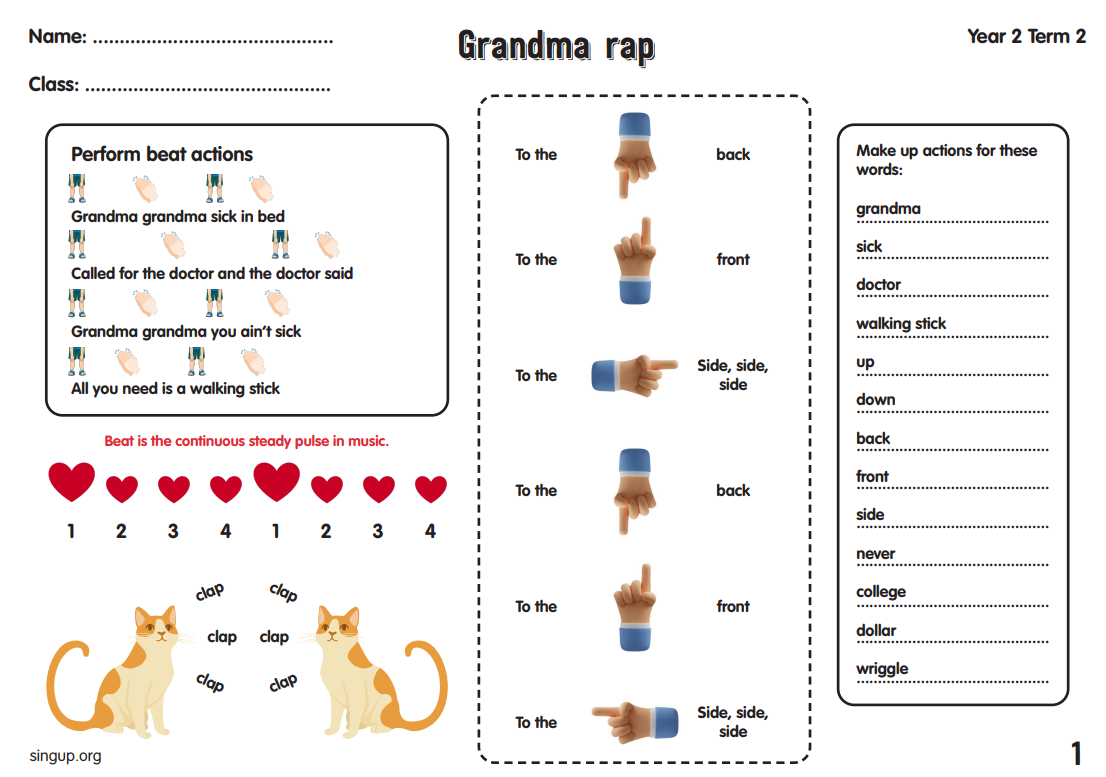
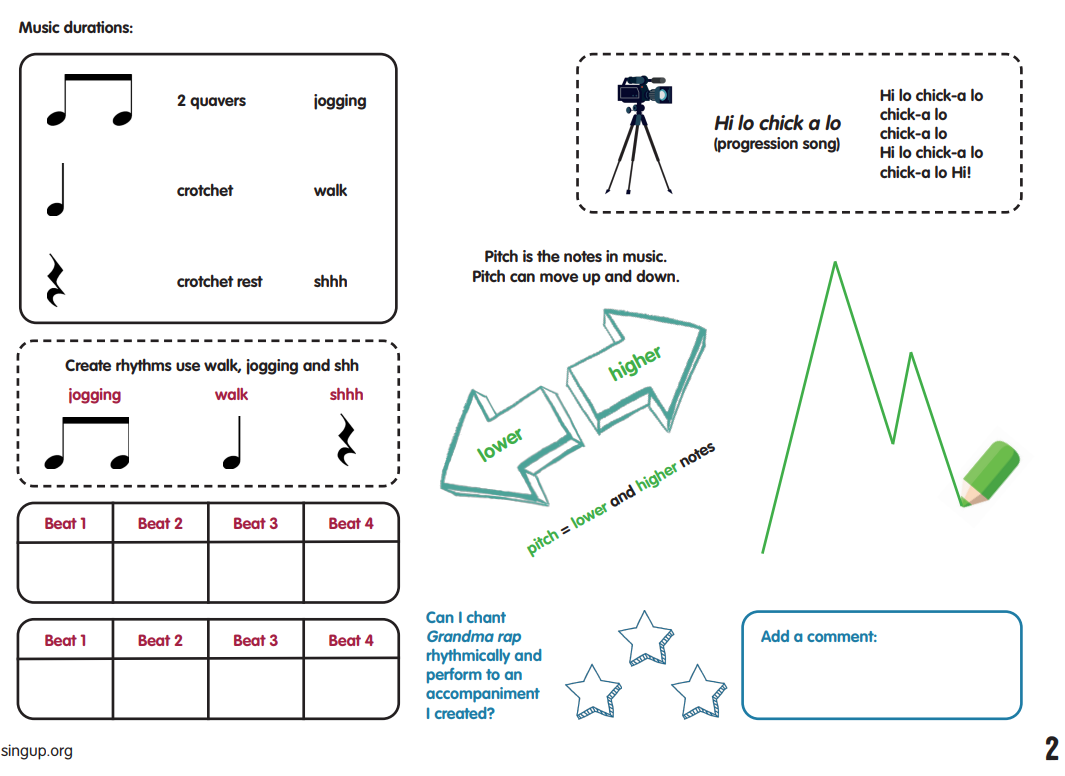
Class 2 start the term exploring beat and rhythm work using crotchets and quavers through Grandma Rap. Beginning with on-the-spot actions, followed by stepping the durations, stick notation is introduced and pupils go on to create their own 4-beat patterns, which they will loop creating an accompaniment to perform the rap to.
Most children will be able to:
- Show the following durations with actions: ‘walk’ (crotchet) and ‘jogging’ (quavers).
- Chant and play rhythms using the durations of ‘walk’ (crotchet), ‘jogging’ (quavers), and ‘shh’ (crotchet rest) from stick notation.
- Learn a clapping game to Hi lo chicka lo that shows the rhythm.
- Compose 4-beat patterns to create a new rhythmic accompaniment, using a looping app.
- Chant Grandma rap rhythmically and perform to an accompaniment children create.
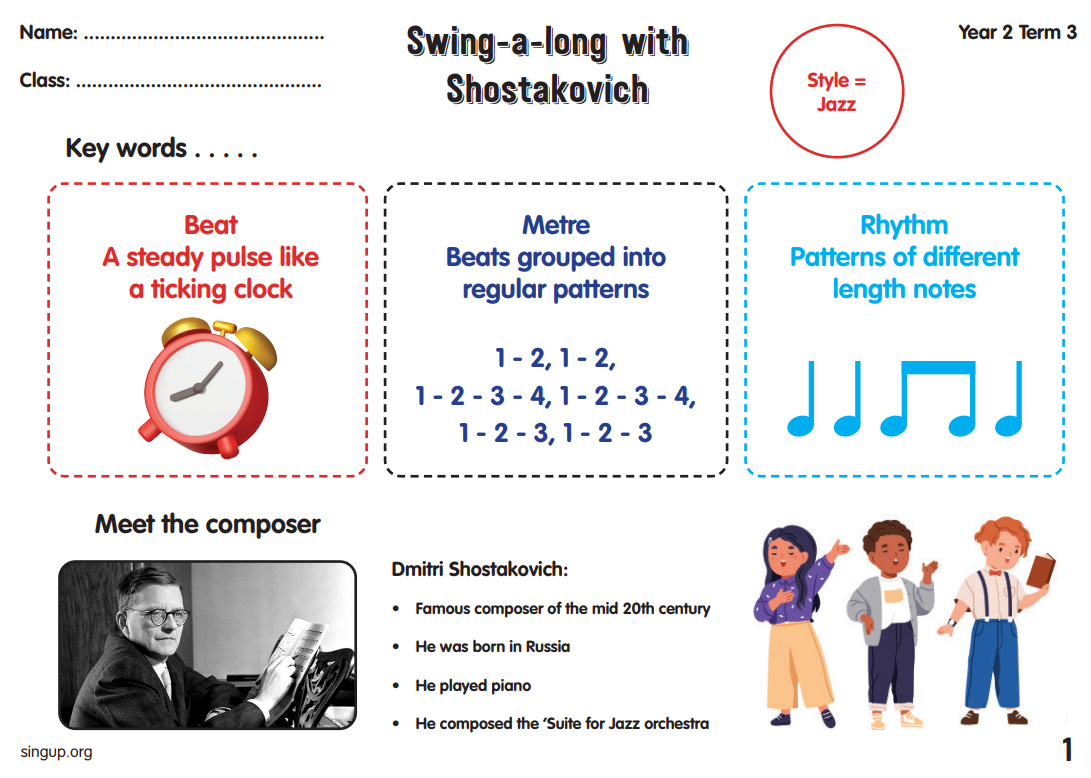
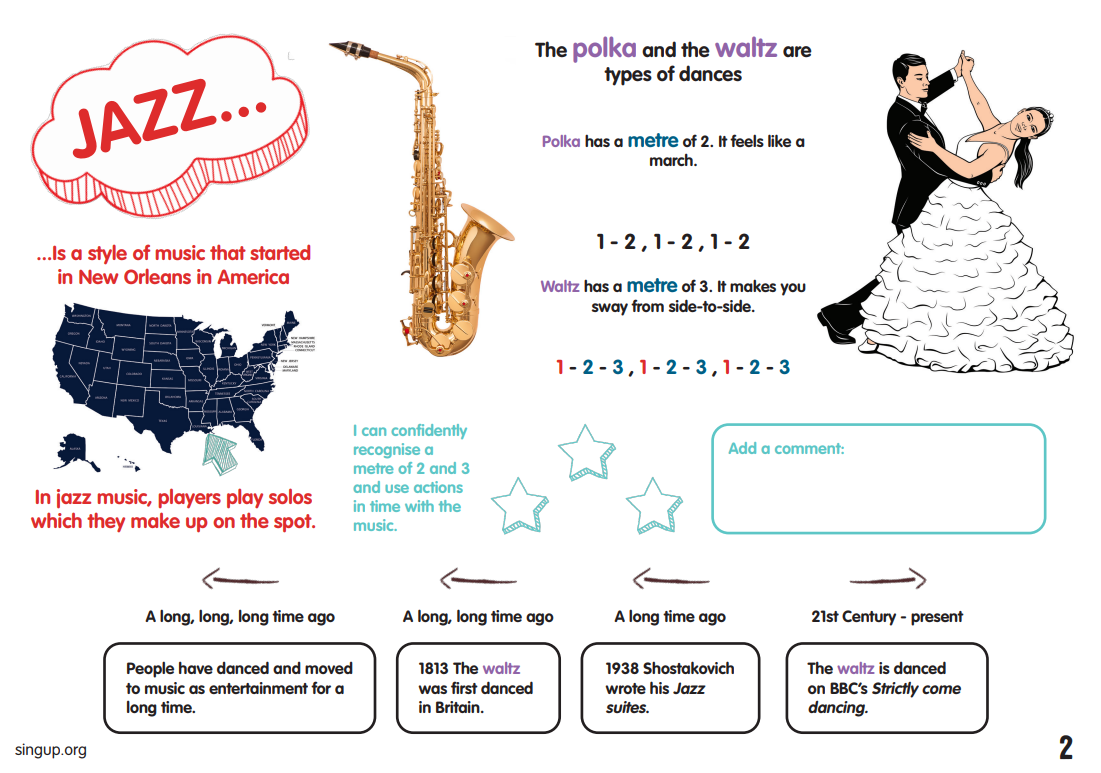
After half term Class 2 will sing, swing, and sway their way through a unit on metre! Along the way, your pupils will feel patterns of beats in their bodies, swinging in time with a partner and marking the beat using simple body percussion patterns. They will explore how beats are grouped and will devise their own body percussion patterns to demonstrate this. They will begin to identify different metres in familiar songs. Finally, the children will be invited to move freely and creatively to two pieces from Shostakovich’s Jazz suites, each in a different metre, using scarves, ribbons, cloths, or even old socks!
Most children will be able to:
- Create action patterns in 2- and 3-time.
- Listen actively and mark the beat by tapping, clapping, and swinging to the music.
- Listen and move, stepping a variety of rhythm patterns (walking, jogging, skipping).
- Understand and explain how beats can be grouped into patterns, and identify them in familiar songs.
- Move freely and creatively to music using a prop.
Phonics
Accordion content
Physical Education - PE
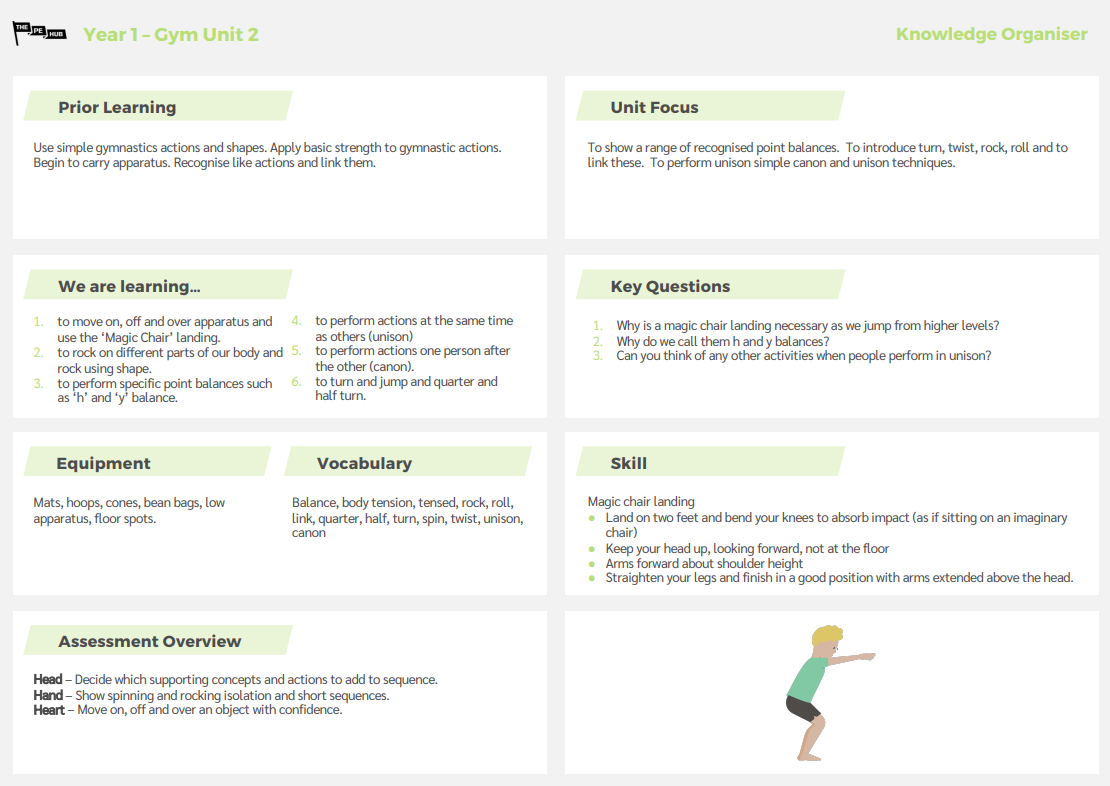
This term, our Class 2 gymnasts are focusing on body tension, balance, and performance. We are moving from simple shapes to creating flowing sequences on and off apparatus.
Key Learning Areas:
-
Safety First: Mastering the “Magic Chair” landing—a crucial technique where children land with bent knees to absorb impact safely.
-
Creative Balances: Learning specific point balances, such as the ‘h’ and ‘y’ shapes, which build core strength and flexibility.
-
Performance Skills: Introducing unison (moving at the same time) and canon (moving one after another) to help children work as a team.
Your child will also explore different ways to rock, turn, and jump, eventually combining these into a short routine with a partner.
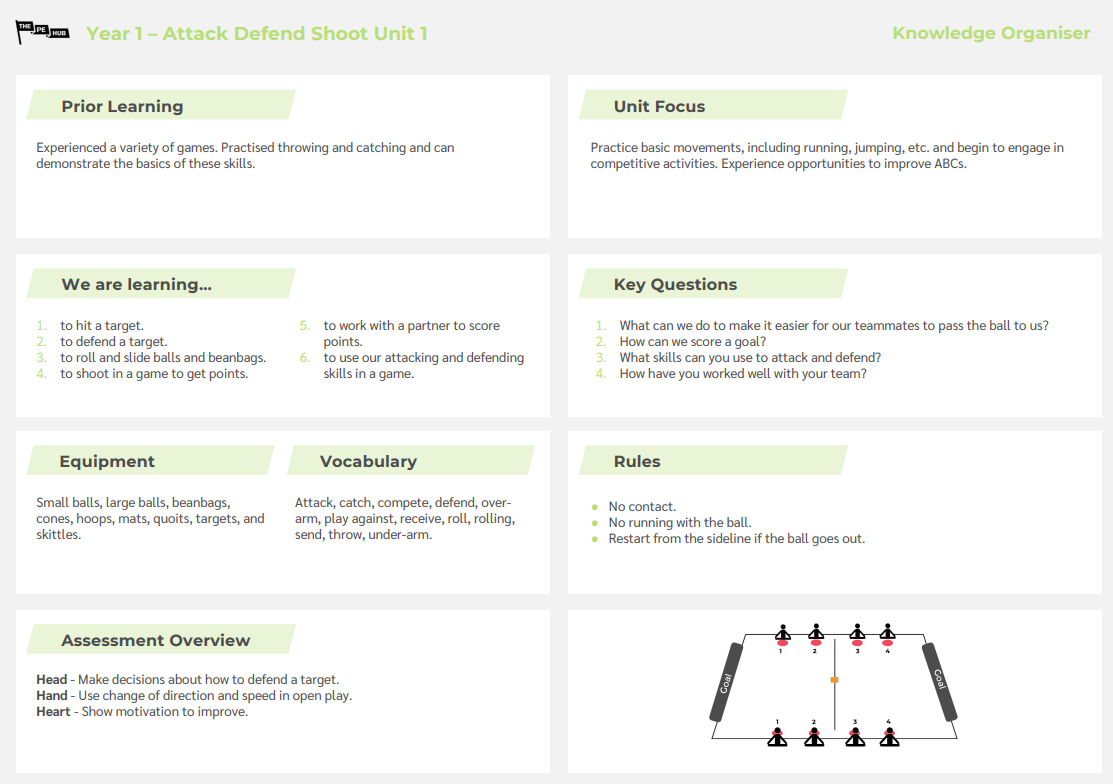
They will also be starting an exciting “Attack, Defend, Shoot” unit! This term, we transition from basic throwing to strategic, competitive team play.
Your child will learn to:
-
Score & Defend: Accuracy in hitting targets and skill in intercepting balls.
-
Movement: Using speed and direction changes to outmanoeuvre opponents.
-
Teamwork: Communicating with partners to create scoring opportunities.
Following rules like “no contact” and “no running with the ball” helps develop their Agility, Balance, and Coordination (ABCs) in a safe, fair environment.
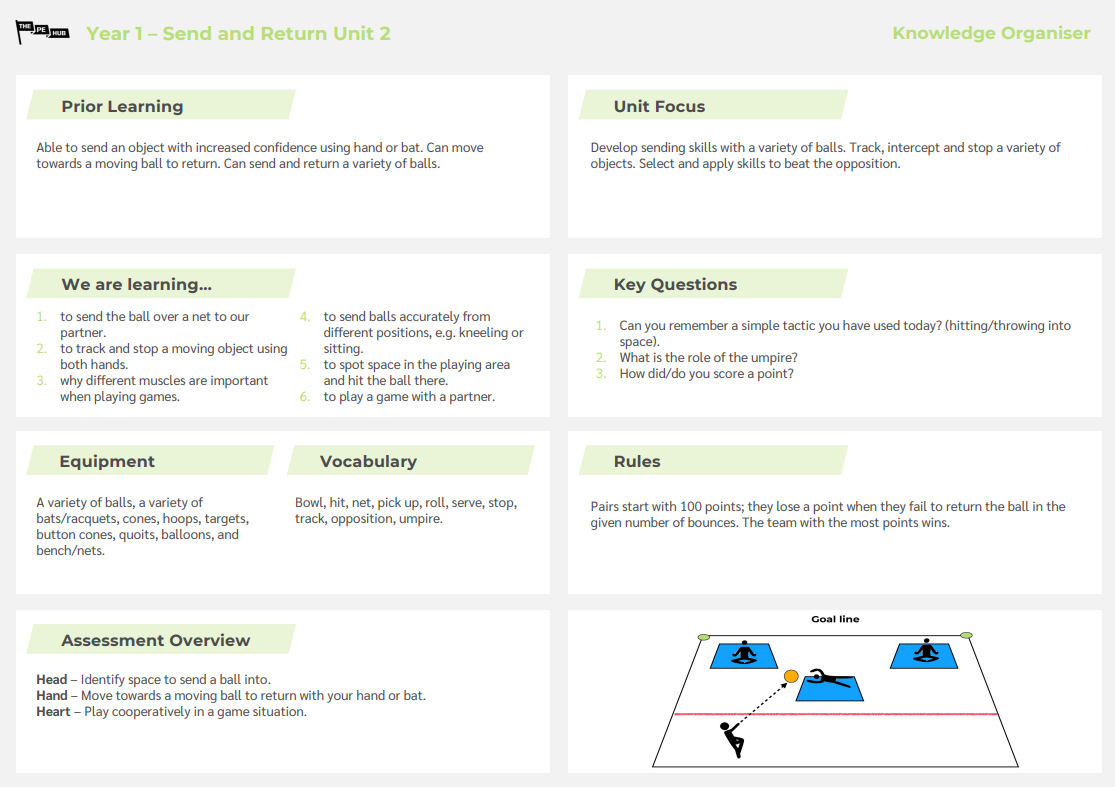
After half term Class 2 are mastering the art of the rally in our "Send and Return" unit. Moving beyond basic throwing, children are now learning to track moving objects and return them over a net with accuracy.
Key Focus Areas:
-
Spatial Awareness: Learning to spot "empty space" on the court to hit the ball where an opponent isn't standing.
-
Inclusion & Adaptability: Practicing skills from sitting or kneeling positions, introducing them to disability sports like Goalball.
-
Tracking: Developing the coordination to move toward a ball and stop it using both hands.
These lessons strengthen core muscles and build the foundation for sports like tennis and volleyball!
After half term the class will also be exploring Control with the Game On coaches.
Personal, Social and Health Education - PSHE
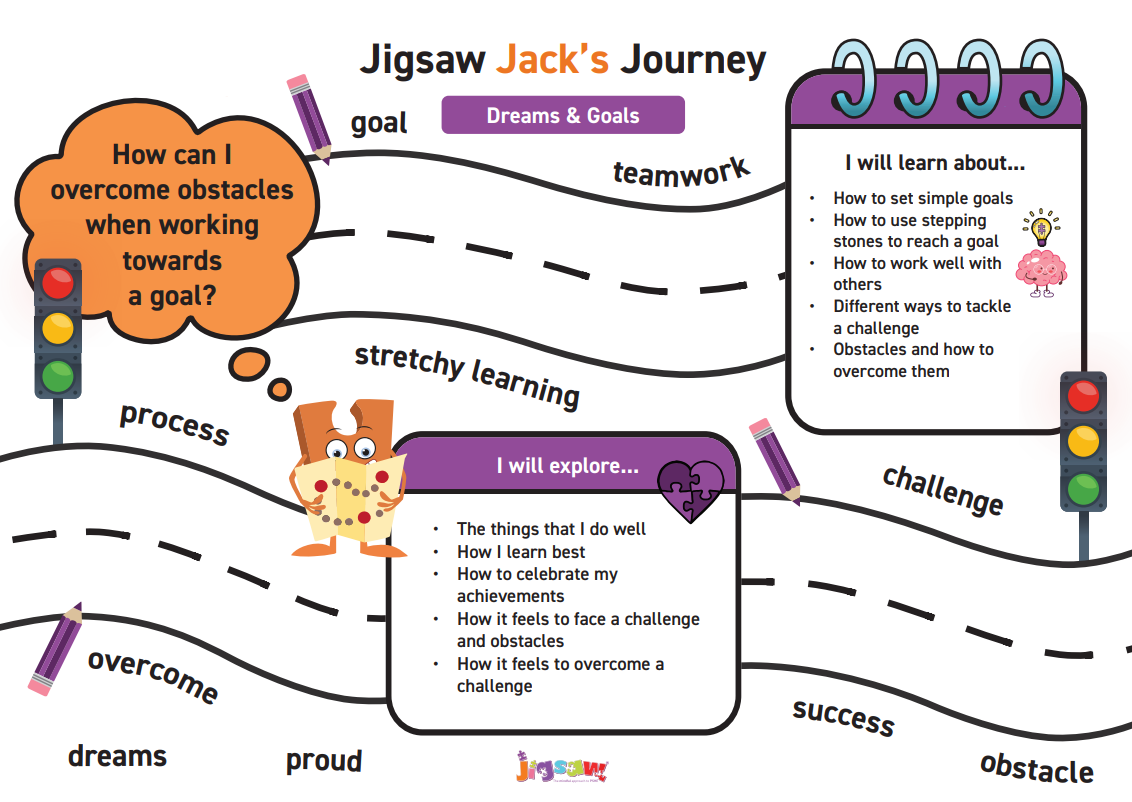
In the unit Dreams and Goals the children will learn about setting simple goals and identifying the "stepping-stones" or processes needed to achieve them. They learn to recognize their own feelings when faced with obstacles and how to overcome these difficulties through "stretchy learning". The curriculum emphasizes working well with a partner and celebrating achievements together. Children are taught to store feelings of success in an "internal treasure chest" to use when things get tough in the future. Important new concepts include team work, overcoming obstacles, and success.
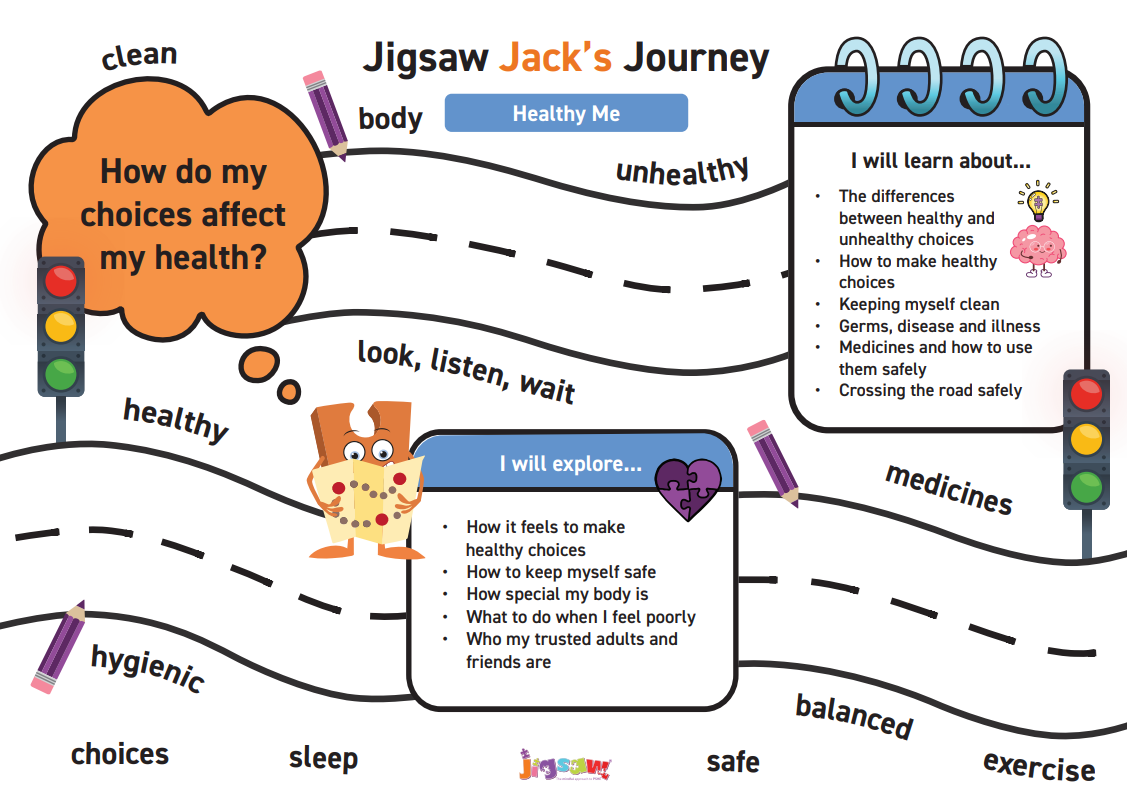
In the unit Healthy Me the children will learn about the difference between making healthy and unhealthy choices and how these decisions impact their feelings. They explore hygiene, learning that germs can cause disease and that keeping clean is essential for staying healthy. Safety is a core component, as students study the Green Cross Code for road safety and identify people in the community who can help keep them safe. The children also learn about the safe use of household products and medicines. Finally, they reflect on their own self-worth, recognizing and celebrating what makes them unique and special.
Religious Education - RE
In the first half of the Spring term the unit is "How do some Muslims show Allah is compassionate and merciful?", Class 2 will explore the core Islamic beliefs of compassion and mercy. They will learn about the Bismillah, a special phrase used by Muslims to honour Allah as the source of all existence and love. Through engaging stories of the Prophet Muhammad, such as the 'Crying Camel', children discover why it is important to treat all living creatures with kindness. The children also study how these values are lived out during Ramadan and Eid-ul-Fitr through fasting and giving to those in need.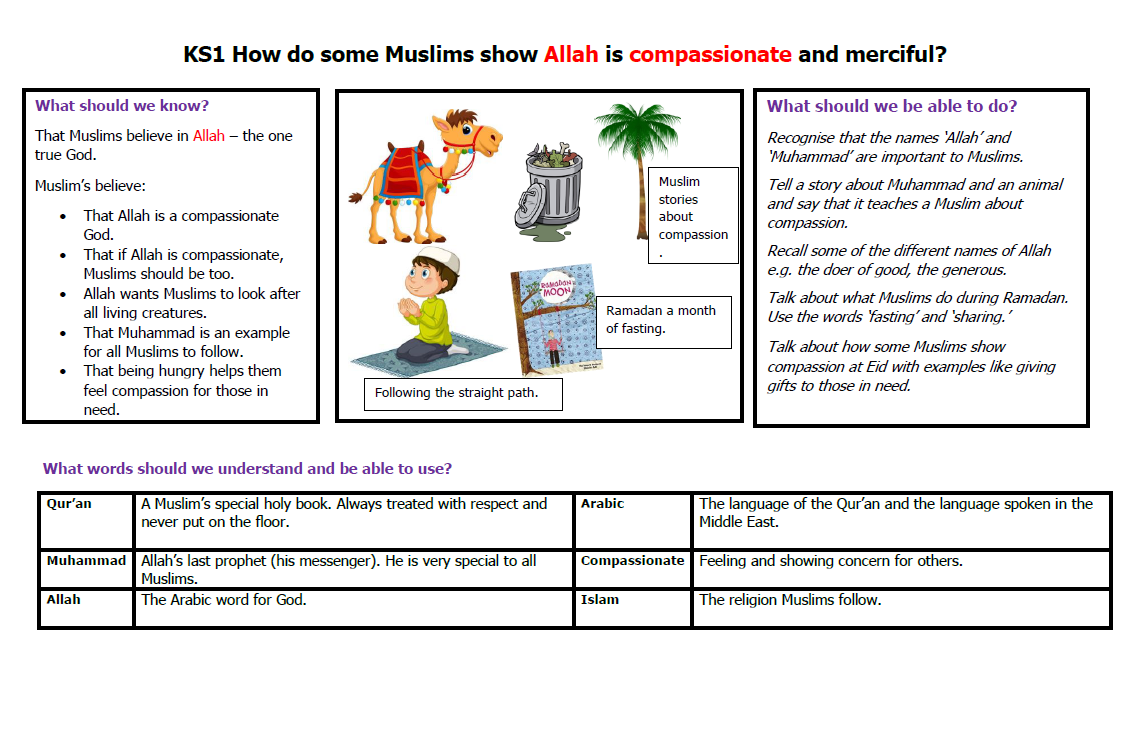
After half term, we return to Christianity. In the unit "Salvation: Why does Easter matter to Christians?", Class 2 children build on their understanding of the "Big Story" of the Bible. They explore the core Christian belief that Jesus’ death and resurrection "build a bridge" between God and humans, offering forgiveness and a fresh start. The children study the events of Holy Week in sequence—from the celebration of Palm Sunday to the reflection of Good Friday and the joy of Easter Sunday. They examine how these beliefs are expressed in church worship and discuss themes of sadness, hope, and new life through symbols like the empty tomb.