
Spring Term 2026
English - Writing
In the Spring term, Class 4 will embark on an ambitious writing journey through four compelling texts. Using the Literacy Tree approach, our lessons will bridge the gap between historical reality and dystopian fiction, allowing children to write for a variety of audiences and purposes.
Hidden Figures by Margot Lee Shetterly
We begin by exploring the inspiring true story of Dorothy Vaughan, Mary Jackson, Katherine Johnson, and Christine Darden. These African American mathematicians were essential to NASA’s success during the Space Race. At a time when racial and gender barriers were significant, these women used their genius to change the world. Katherine Johnson, for instance, famously provided the manual trajectory calculations for the first American in space in 1961.
- Key Learning: Children will write job adverts, formal persuasive letters, and diary entries.
- Main Outcome: A non-chronological report on the history of NASA and the achievements of these pioneering women.
Suffragette: The Battle for Equality by David Roberts
Next, we shift our focus to the history of the suffrage movement. This beautifully illustrated book introduces children to the bravery of figures like Emmeline Pankhurst and Rosa May Billinghurst. It provides a deep look at the global struggle for the vote and the power of protest.
- Key Learning: We will focus on balanced arguments, news reports, and formal speeches.
- Main Outcome: Planning and writing a persuasive campaign for a law the children believe should be changed.
Paradise Sands by Levi Pinfold
This unit moves into the world of surreal fairy tales. When a girl and her brothers stumble upon a mysterious hotel, they must use their willpower to escape. The haunting artwork and cryptic poem at the heart of the story help children develop their skills in creating atmosphere.
- Key Learning: Pupils will write descriptive story openings and engage in formal letter writing in role.
- Main Outcome: A narrative prequel that explains the origins of the mysterious "Teller."
Boy in the Tower by Polly Ho-Yen
We conclude the term with a dystopian mystery. Living in a tower block, a boy named Ade watches as the buildings around him begin to fall and strange plants appear. This story explores themes of isolation, friendship, and survival.
- Key Learning: The children will master the use of past and present tense while exploring journalistic writing and warning posters.
- Main Outcome: An original version of a narrative that plays with time and tension.
Through these diverse texts, Class 4 will refine their grammar and composition skills while exploring powerful themes of empowerment and perseverance.
Computing
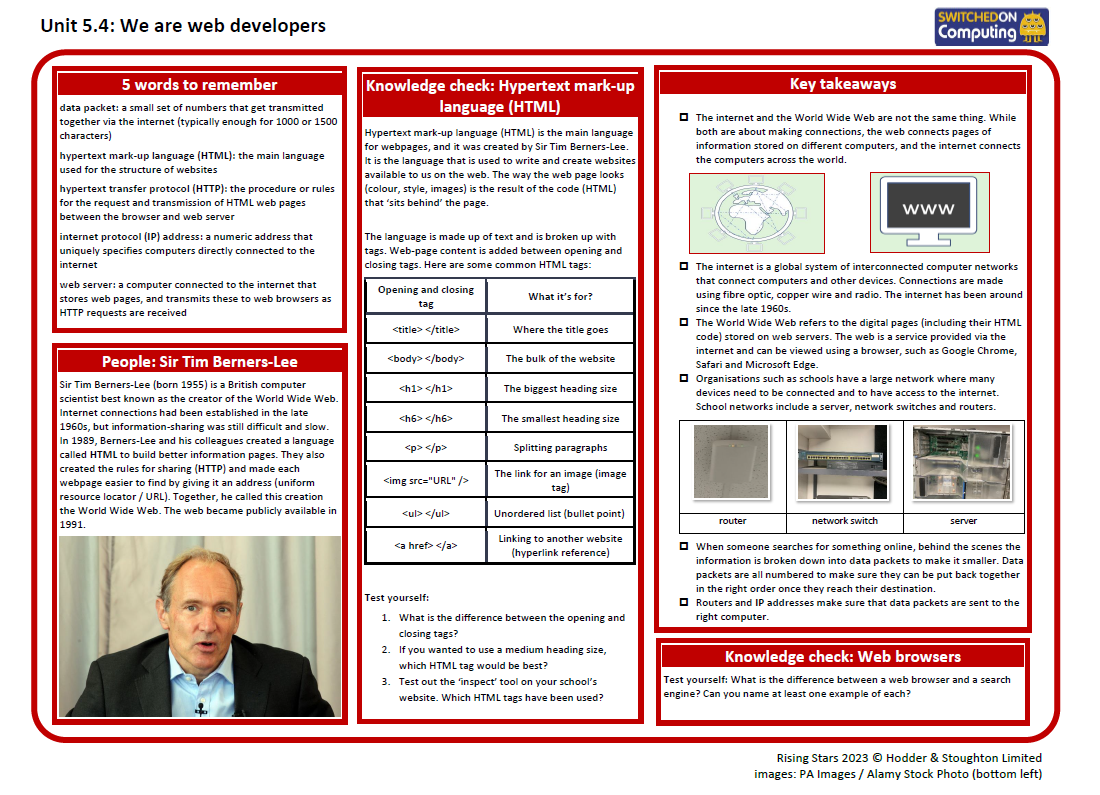
We start the new school year with the unit: 'We are web developers', where pupils explore how the Internet and school networks function. They learn how data is transmitted in packets and discover HTML, the language of the web. Pupils will also develop skills in web design by using Google Sites to build their own website. This unit highlights online safety through collaborative content creation.
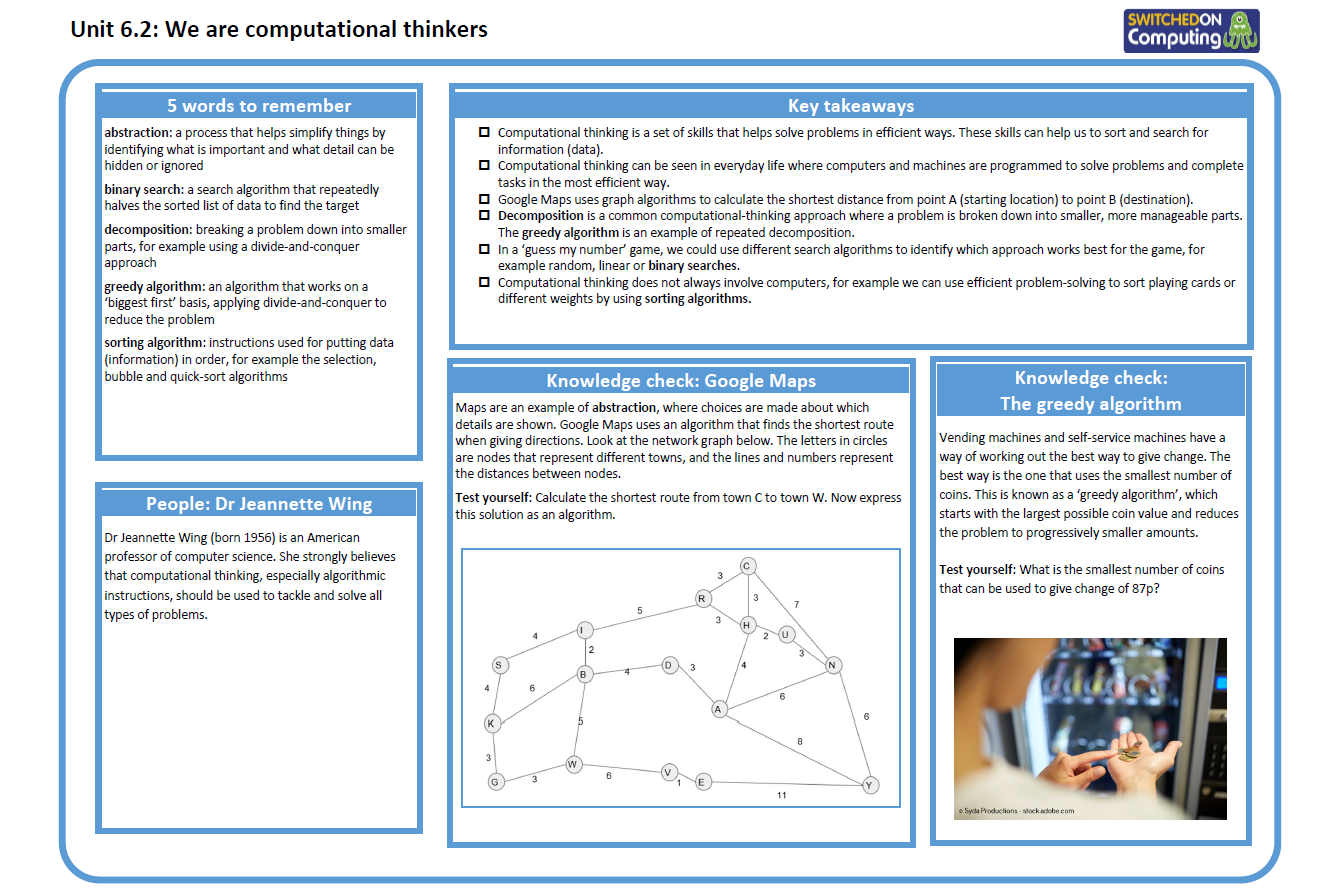
After half term we will explore the unit: 'We are computational thinkers', where pupils master searching, sorting, and mathematical algorithms,. Children learn to find optimum routes on maps and use greedy algorithms to calculate the smallest number of coins for change,. They explore the efficiency of different methods, like binary search, and sorting techniques, such as quicksort. Finally, pupils implement these algorithms as Scratch or Snap! programs.
Maths
In the Spring term, Year 5 and 6 children focus on several key mathematical areas:
• Fractions (Spring 1): Pupils learn to multiply fractions and mixed numbers by integers or other fractions and divide fractions by integers. They also calculate fractions of amounts.
• Decimals (Spring 2 and 4): Children explore place value up to three decimal places, including ordering, comparing, and rounding. They also perform calculations with decimals, such as adding and subtracting values with different decimal places and multiplying or dividing by integers or powers of ten.
• Area, Perimeter, and Volume (Spring 3): This block covers calculating the area of triangles and parallelograms, finding the area of compound shapes, and determining the volume of cuboids.
• Fractions, Decimals, and Percentages (Spring 5): Children study equivalences between these forms, learn to order them, and calculate percentages of amounts.
Music
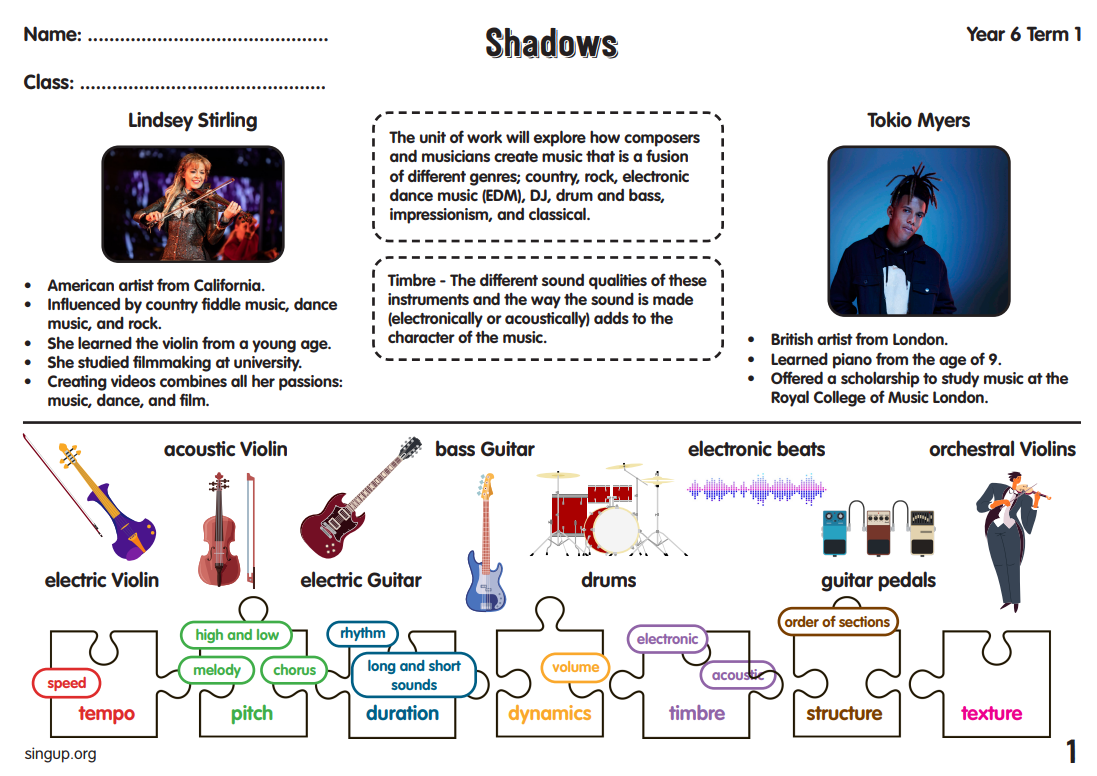
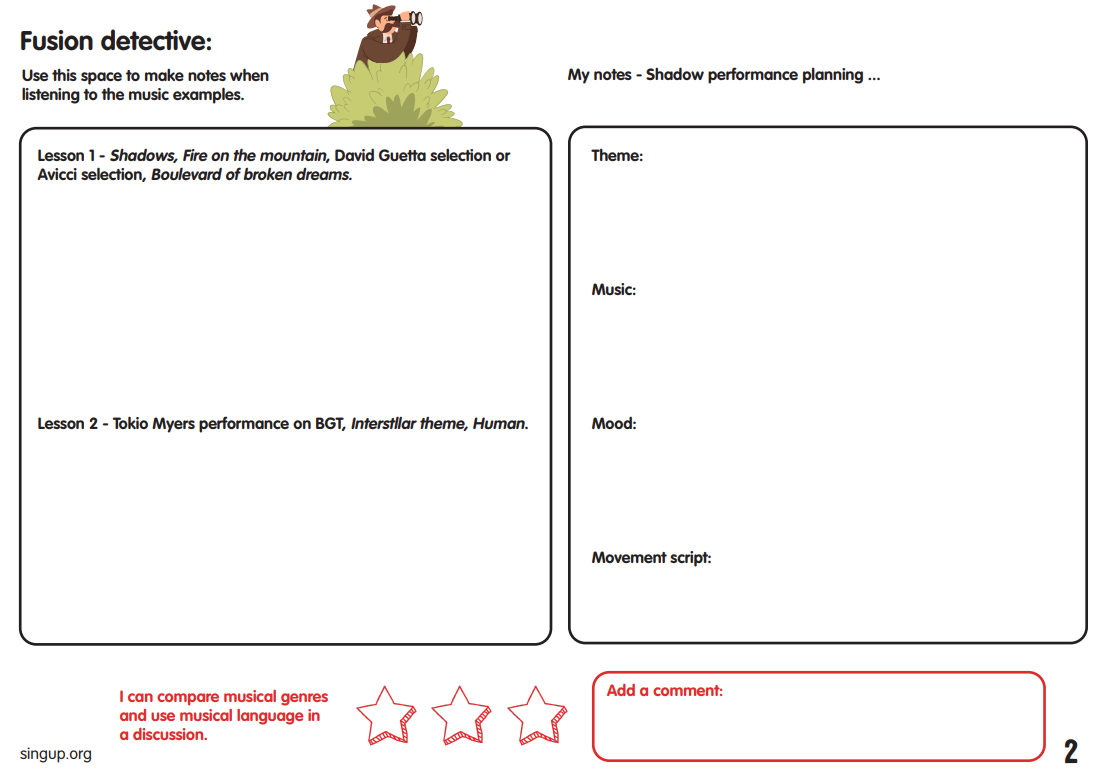
Class 4 start the term with a listening unit based around the piece Shadows by Lindsey Stirling – an American violinist and dancer. As an artist, she creates music that is a fusion of country, electronic dance music (EDM), and rock. There are lots of video examples to watch with focused questions to guide listening and base discussions around. Tokio Myers is also included in this unit as an artist who found fame on the TV programme Britain’s Got Talent. He studied classical piano at the Royal College of Music and uses his talents to create music that fuses many different genres. The unit ends with a creative response to music using shadows.
Most children will be able to:
- Explore the influences on an artist by comparing pieces of music from different genres.
- Identify features of timbre, instrumentation, and expression in an extract of recorded music.
- Use musical knowledge and vocabulary to discuss similarities and differences in pieces of music.
- Create a shadow movement piece in response to music.
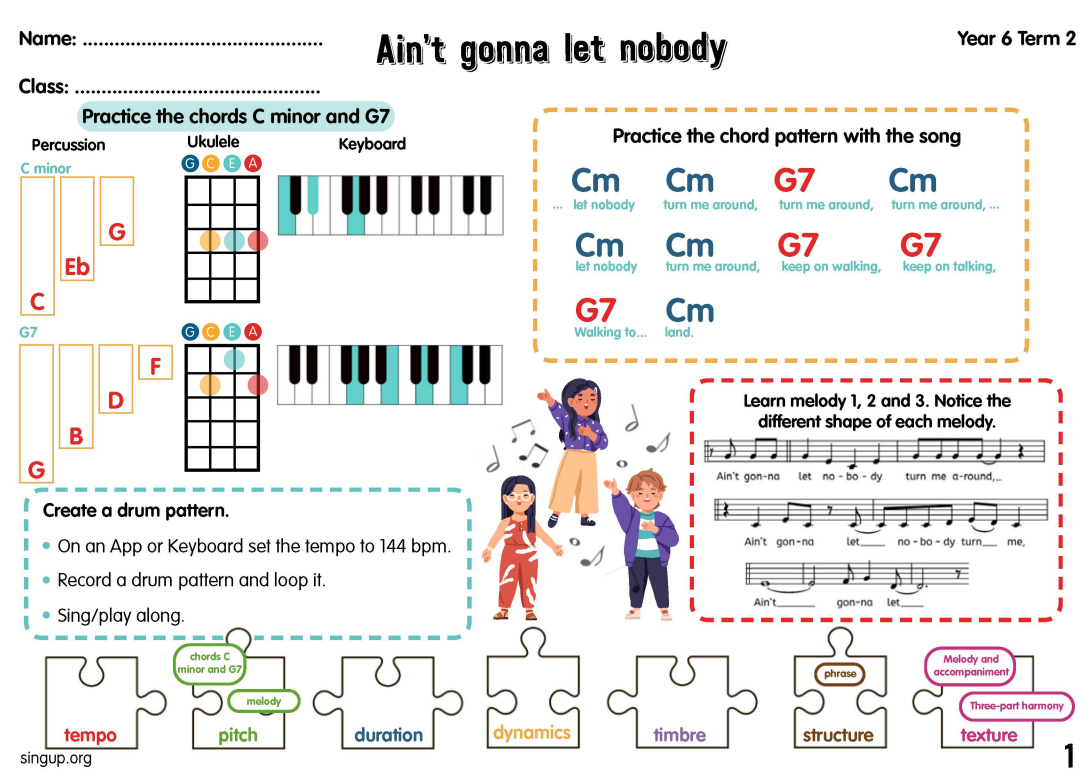
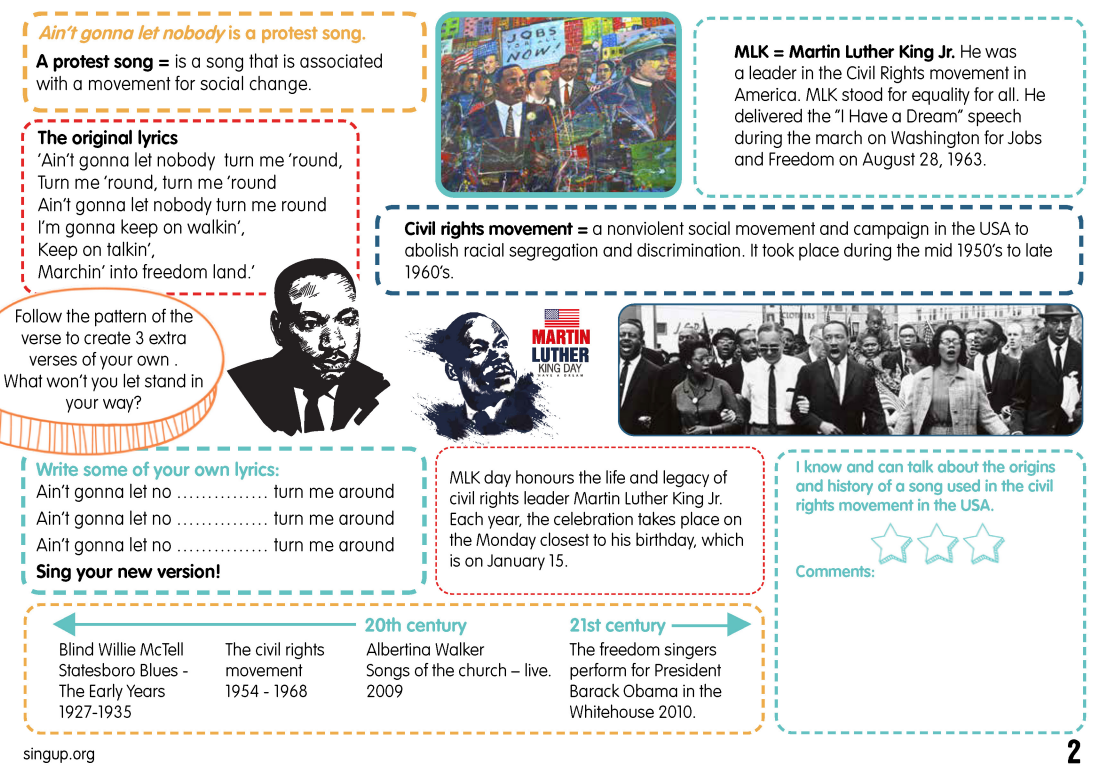
After half term, the class will explore a unit which features an R‘n’B-inspired arrangement of a traditional spiritual, sung in unison and three-part harmony. In addition to singing the song, comparing versions, writing new lyrics, and creating their own accompaniment ideas, pupils will learn about the social and historical context of the civil rights movement in the USA.
Most children will be able to:
- Improvise over the chords C minor and G7.
- Sing accurately in three parts.
- Play chords on tuned percussion, ukulele, keyboard, or apps.
- Develop knowledge and understanding of the origins, history, and social context of a song used in the civil rights movement in the USA.
Physical Education - PE
Throughout the Spring term, Game On coaches will be teaching a 'Speed, Agilty and coordination' unit as well as Cricket to Year 6 whilst Year 5 have forest school.
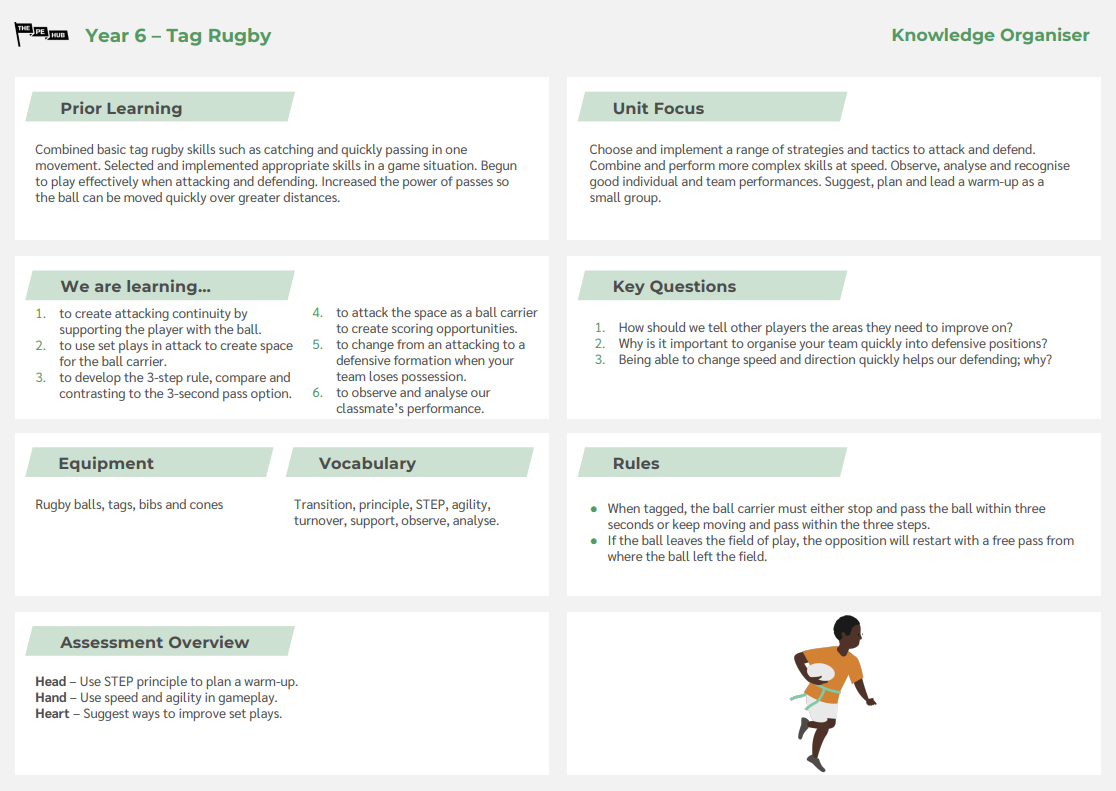
Class 4 pupils are advancing from basic skills to high-speed game strategy. Their tag rugby unit focuses on "Tactical Awareness"—learning not just how to run and pass, but how to outmanoeuvre an opposition through teamwork.
Key Learning Areas:
-
Attacking Strategy: Using "set plays" and the "spaces not faces" rule to find gaps in the defense.
-
The Rule of 3: Mastering the choice to pass within 3 seconds or 3 steps after being tagged to maintain momentum.
-
Transitions: Learning to switch instantly from attacking to defensive formations during a turnover.
-
Leadership: Students will lead warm-ups using the STEP principle (adjusting Space, Task, Equipment, or People).
Ask your child to explain the "3-step rule" or how they used the STEP principle to design a warm-up. You can practice agility in the park by having them try to dodge you in a confined space!
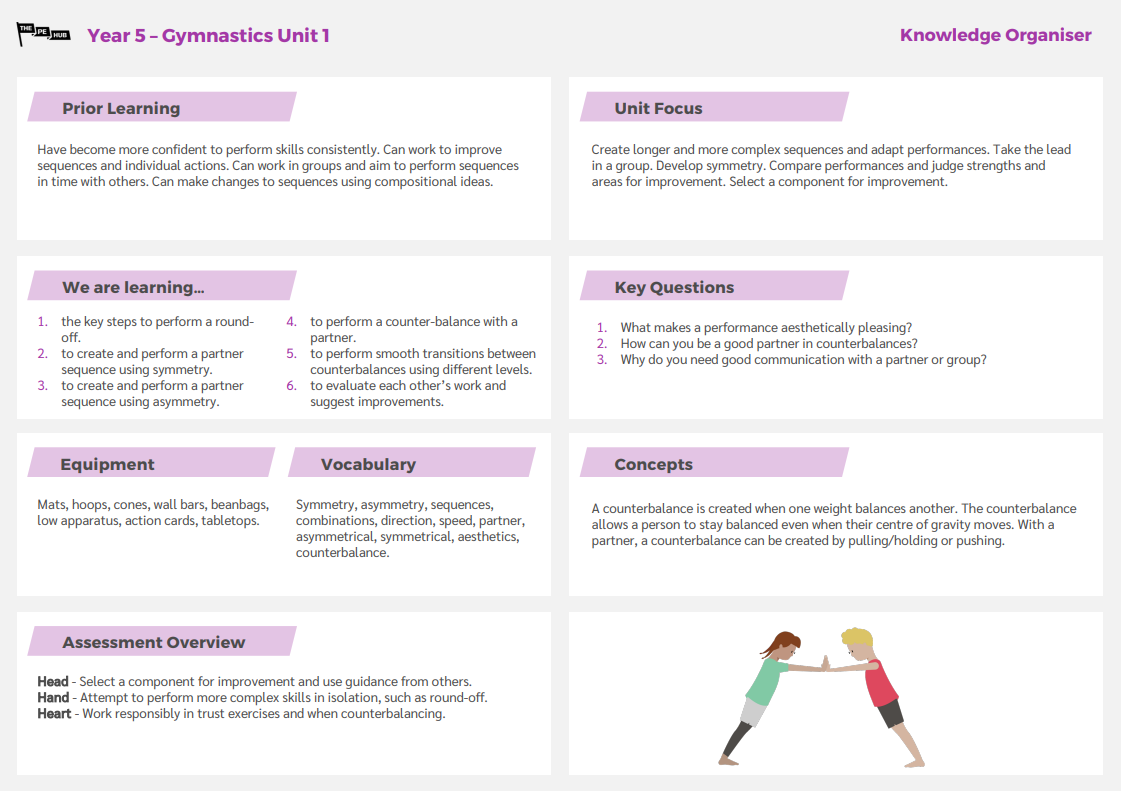
After half term they will also be learning some gymnastics. In Class 4, gymnastics moves from individual shapes to complex partner sequences. This term, your child is focusing on precision, aesthetics, and the physics of movement.
Key Learning Areas:
-
Symmetry vs. Asymmetry: Creating sequences where both sides match perfectly, contrasted with "asymmetrical" movements that use different angles and levels.
-
Counterbalance: A core concept where partners use each other’s weight (through pushing or pulling) to stay balanced. This requires high levels of trust and body tension.
-
Advanced Skills: Mastering the round-off and ensuring smooth transitions between floor work and apparatus.
Students will also take on leadership roles, evaluating their peers' performances to suggest improvements.
Ask your child to explain the difference between a "pulling" and "pushing" counterbalance. You can practice "Symmetry Matches" at home—strike a pose and see if your child can mirror it perfectly!
Personal, Social and Health Education - PSHE
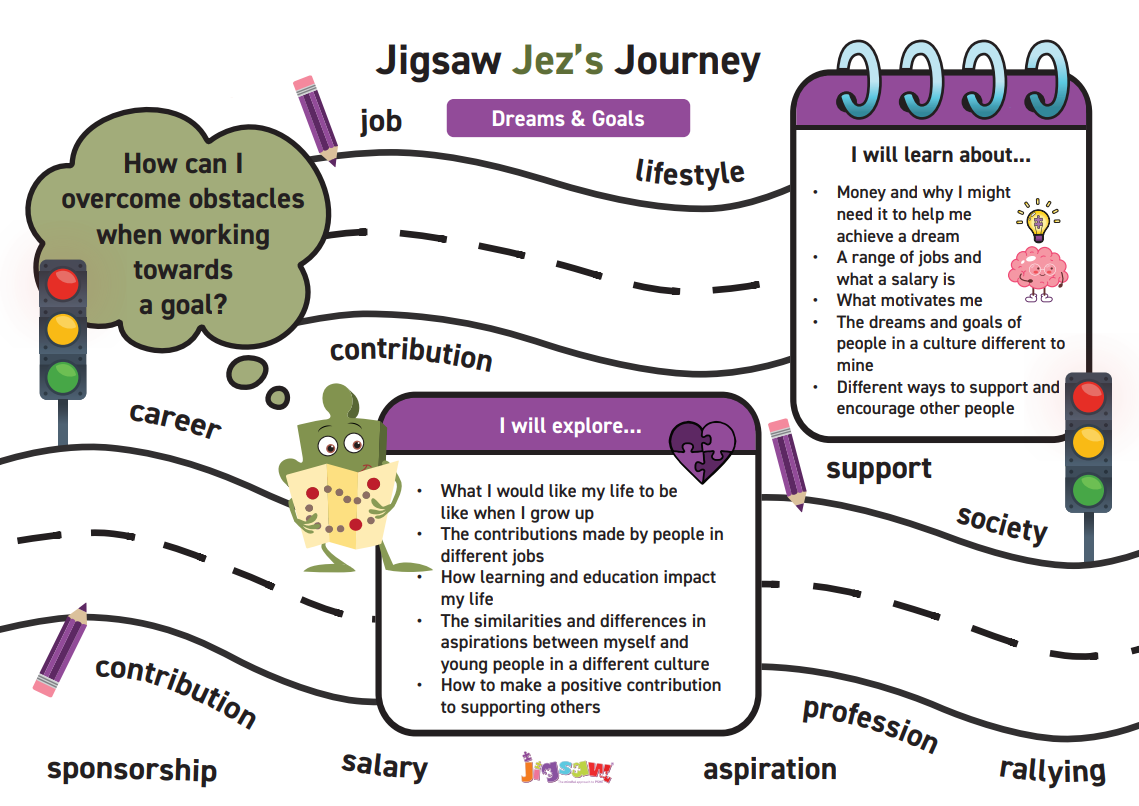
In the unit Dreams and Goals the children will learn about the practicalities of achieving their aspirations, including the understanding that money is often needed to fulfill certain dreams. They explore various careers and professions, noting that different jobs provide different salaries. A major focus is placed on global citizenship, as children compare their own dreams with those of people from different cultures. They reflect on how they can make a positive contribution to support others both locally and abroad. Key terms introduced include salary, aspiration, culture, and contribution.
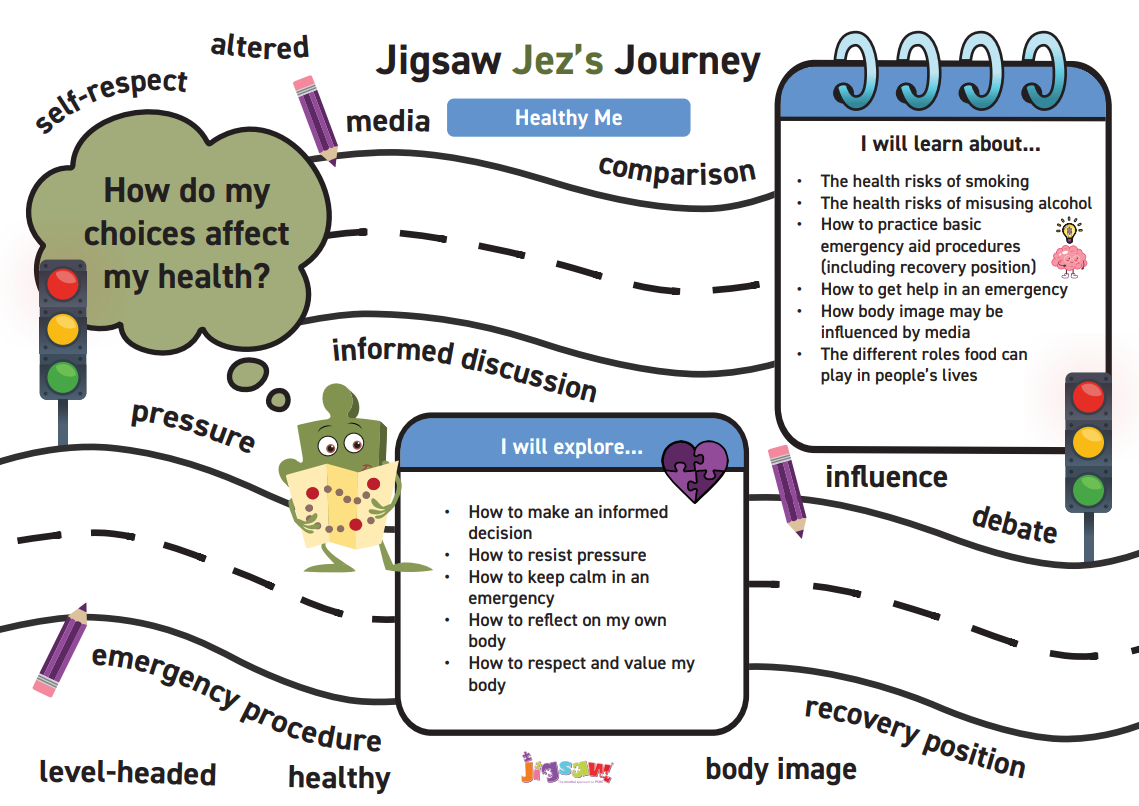
In the unit Healthy Me the children will learn about the health risks associated with smoking, vaping, and alcohol misuse, particularly regarding their effects on the heart, liver, and lungs. They gain practical life skills by learning basic emergency procedures, such as the recovery position and how to contact emergency services. The unit explores how media, social media, and celebrity culture influence body image and self-perception. Students develop strategies to resist peer pressure, make informed lifestyle decisions, and build the self-respect needed to value their own bodies for who they are.
Religious Education - RE
In the unit Kingdom of God: What kind of king is Jesus?, the children will learn about the Christian concept of God’s kingdom and how it differs from earthly power. They will explore parables, such as the Great Feast, to understand that Jesus is seen as a "servant king" whose rule is defined by love and justice. The class will investigate how Christians put these beliefs into practice through service to the community and standing up for others. Finally, pupils will reflect on how the values of God’s kingdom might influence their own choices and their vision for a better world.
After half term, Class 4 will explore Salvation: What difference does the Resurrection make to Christians?, They will delve into the central Christian belief in the resurrection of Jesus. They will place this event within the Bible’s ‘big story’, exploring how concepts like sacrifice, incarnation, and hope connect. Through studying accounts in the Gospel of Luke, the children will learn why Christians find the resurrection so significant and how it shapes their worship on Good Friday and Easter Sunday. Pupils will also consider how these beliefs influence a person’s outlook on life and their response to global challenges, encouraging deep reflection on themes of hope.